Sign in




GRT 200G Multimode Optical Transceiver
< BackGRT 200G Multimode Optical Transceiver
As data center bandwidth evolves from 100G to higher speeds, 200G has become a frequently discussed yet often overlooked milestone. Some solution providers prefer to move directly to 400G, while others continue to expand their existing 100G infrastructure. In reality, many data centers are facing increasing bandwidth pressure driven by growing traffic, but are reluctant to bear the high upgrade costs and compatibility risks associated with implementing high-end solutions all at once. The 200G QSFP56 solution sits right at the intersection of these challenges. It is a natural extension of 100G and an intermediate step toward even higher speeds.
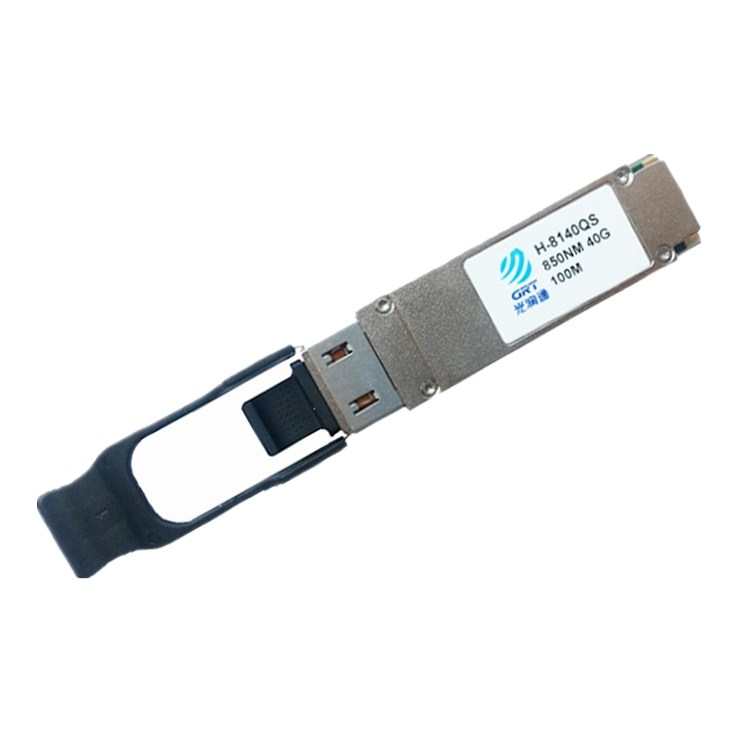
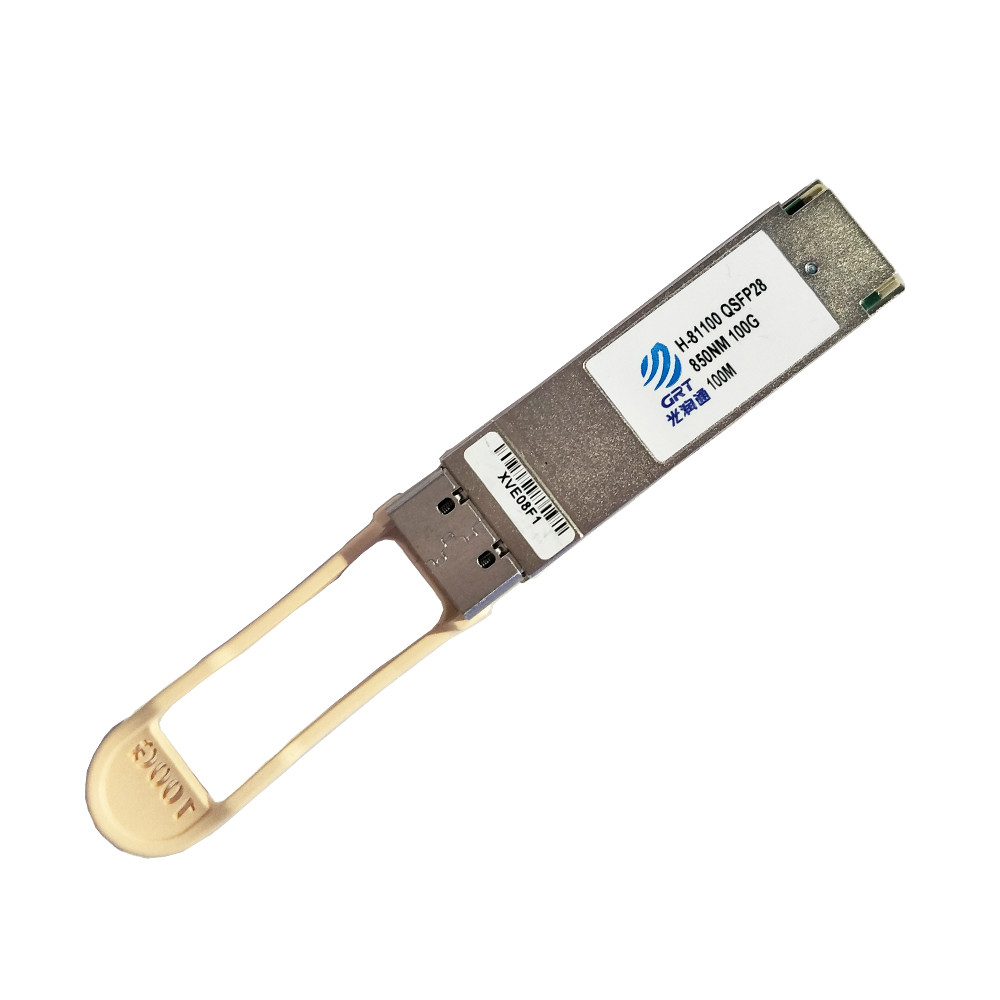
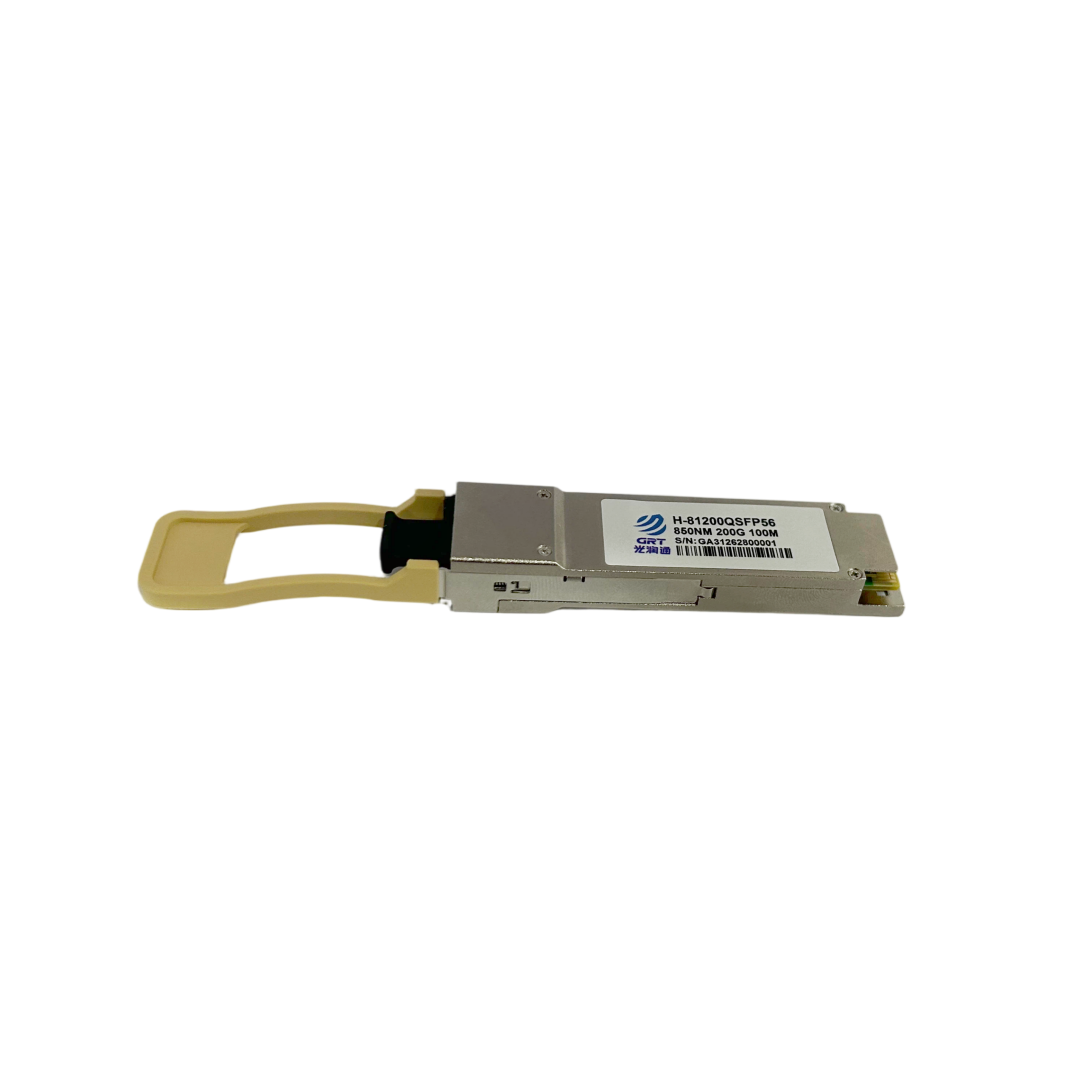
The H-81200QSFP56 200G QSFP56 SR4 optical transceiver launched by Guangruntong (GRT) is a practical solution designed for this scenario. Specifically developed for 200GBASE-SR4 Ethernet applications, it adopts a four-channel parallel architecture. Each lane operates at a baud rate of 26.5625 GBd and delivers 53 Gbps through PAM4 modulation, achieving an aggregate module data rate of 212.5 Gbps.
Multimode Fiber Transmission Distance: Dual Compatibility with OM3 and OM4
In real-world data center cabling environments, facilities built at different times often use multimode fibers of different grades. OM3 and OM4 are currently the two most widely deployed types of multimode fiber. A transceiver's compatibility with both directly affects procurement flexibility and deployment versatility.
The H-81200QSFP56 uses an 850 nm VCSEL laser paired with a PIN receiver. It supports transmission distances of up to 70 meters over OM3 multimode fiber and 100 meters over OM4 multimode fiber. These distances cover most interconnections between data center racks, rows, and nearby rooms. For operations and maintenance teams, there is no need to select different transceivers for specific fiber grades. A single model can work with mixed multimode fiber resources within the same facility, simplifying spare-parts management.
The module features a single MPO-12 connector, complying with mainstream 200G SR4 cabling standards. Existing MPO fiber infrastructure used for 100G SR4 can be reused directly, eliminating the need for recabling.
Power Consumption Control: A Key Constraint for High-Density Deployment
When a single switch reaches a port density of 32 or even 64 ports, optical transceiver power consumption becomes more than an individual component specification. It becomes a system-level factor affecting the thermal design of the entire device. If the power consumption of a single 200G port is too high, the overall thermal load and cooling costs of a fully populated chassis can increase significantly.
While delivering an aggregate data rate of 212.5 Gbps, the H-81200QSFP56 keeps power consumption below 5 W and uses a single +3.3 V power supply. In high-density deployment scenarios, this means that the additional thermal load remains manageable even when a switch is fully populated with optical transceivers, placing less additional demand on data center air conditioning and cooling systems.
The module has an operating case temperature range of 0 to +70°C and a storage temperature range of -40 to +85°C, making it suitable for standard data center environments and edge computing scenarios.
Digital Diagnostic Monitoring: The Foundation of Operational Visibility
The need for optical transceiver observability among data center operations teams is shifting from "optional" to "essential." When traditional modules without diagnostic functions experience link degradation, troubleshooting often relies on replacing components one by one and making manual assessments. This process is time-consuming and prone to misjudgment.
The H-81200QSFP56 integrates an I2C interface and Digital Diagnostic Monitoring (DDM), allowing real-time access to operating parameters through a standard management channel. Key indicators include temperature, supply voltage, bias current, and transmit and receive optical power. Access to these data enables operations teams to intervene proactively when early signs of link degradation appear, rather than waiting for a communication failure before beginning troubleshooting.
The module's electrical interface complies with the 200GAUI-4 standard and connects directly to the SerDes interfaces of mainstream switch chips. No additional electrical interface adaptation layer is required, simplifying signal-chain design.
Standards Compliance and Interoperability
The maturity of the 200G ecosystem depends largely on widespread standards compliance. At the protocol level, the H-81200QSFP56 complies with IEEE 802.3bs and IEEE 802.3cd. Its management interface follows the SFF-8636 universal management specification, Rev. 4.0, while its physical layer conforms to the form factor and pin definitions of the QSFP56 MSA (Multi-Source Agreement).
The direct benefit of standards compliance is interoperability. In data center procurement, optical transceivers often need to work with switches from different brands. Compliance with established standards helps ensure plug-and-play compatibility with 200G ports from mainstream vendors, avoiding compatibility issues caused by proprietary protocols or non-standard designs.
The module also complies with the RoHS-10 environmental standard, meeting data center procurement requirements for restrictions on hazardous substances.
Delivery Assurance from Guangruntong (GRT)
With sixteen years of experience in optical communications, Guangruntong (GRT) has developed comprehensive engineering capabilities in optical transceiver design, packaging, and testing. Every H-81200QSFP56 module undergoes comprehensive performance testing before shipment to ensure stable transmission at its specified distance and data rate.
For data center operators, choosing a 200G solution is not just a technical decision; it is also a decision about cost and upgrade timing. The H-81200QSFP56 offers a balanced option between 100G and 400G in terms of both performance and cost. It doubles the bandwidth of 100G without requiring the synchronized fiber and switch upgrades often associated with 400G solutions. As data center bandwidth demands continue to grow while upgrade budgets and schedules require careful planning, this positioning offers practical value.
The Guangruntong (GRT) H-81200QSFP56 200G QSFP56 SR4 optical transceiver provides a standardized, low-power, and operations-friendly solution for 200G data center interconnects.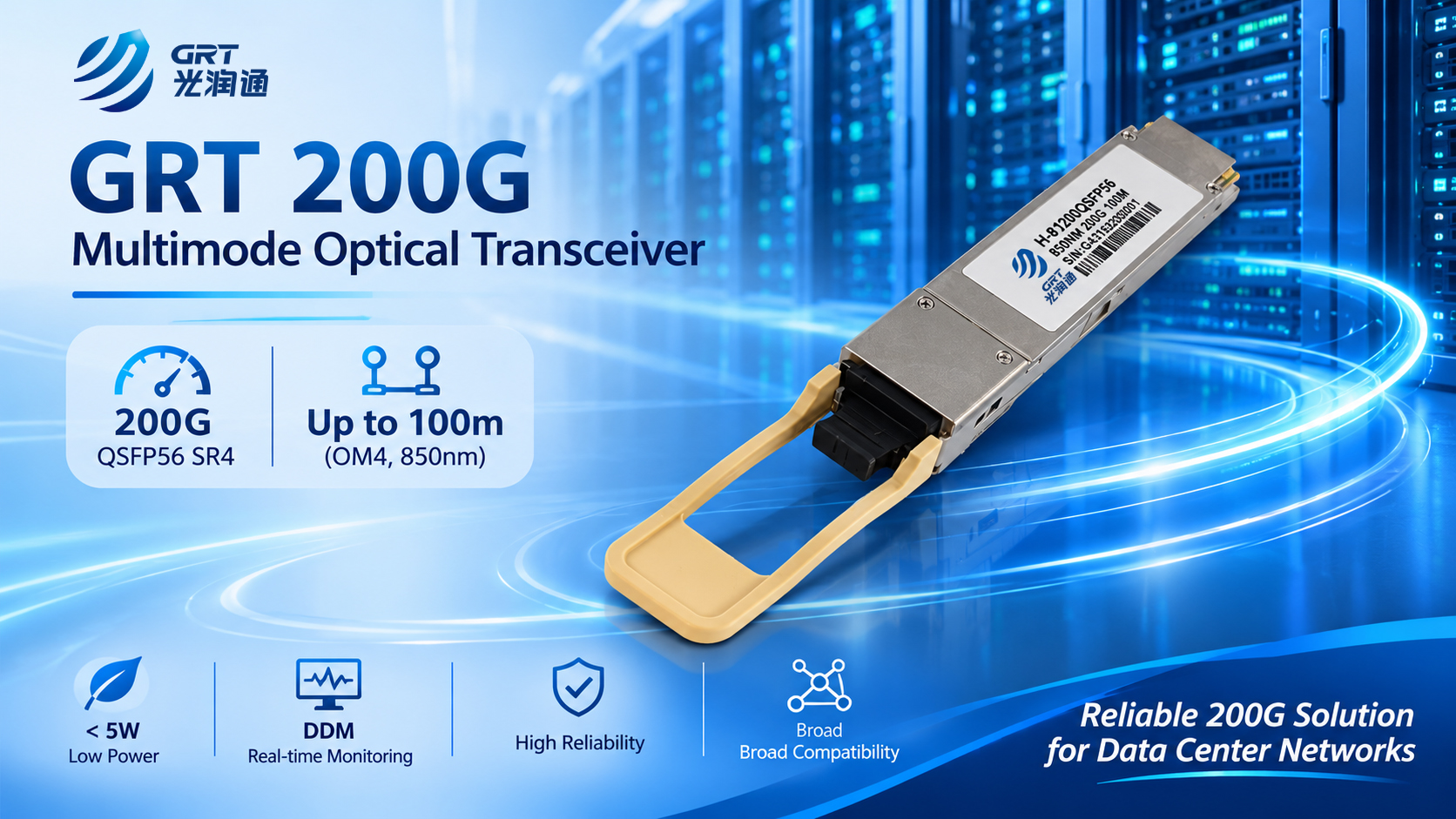
Latest information
- Core Differences Between NIC Redundant Link Functionality and Bypass NICs
- How to Monitor Laser Bias Current to Predict Optical Module Aging
- What Is the Normal Transmit Optical Power of a 10G Optical Transceiver? A Look at the Guangruntong (GRT) H-3410FNL-S
- AC Coupling Capacitors: Small but Essential Components in High-Speed PCIe Signaling
- GRT 200G Multimode Optical Transceiver
- Network Troubleshooting
- Wavelength Division Multiplexing: Enabling Fiber Optics to Carry More Data
- How PCIe Interfaces Affect Signal Integrity