Sign in




Gigabit Multimode SFP Module for Switches, Firewalls, Routers, and Servers
< BackGigabit Multimode SFP Module for Switches, Firewalls, Routers, and Servers
In data communications and network architecture, optical transceivers are essential components connecting core devices such as switches, firewalls, routers, and servers. Their compatibility and transmission stability directly affect overall network efficiency and scalability. The Guangruntong (GRT) G-8501DNL Gigabit Multimode SFP Transceiver, featuring broad device compatibility, precisely optimized technical performance, and extensive application coverage, is an ideal solution for interconnecting switches, firewalls, routers, and servers in enterprise networks, data centers, and telecommunications links. It provides stable, high-speed fiber-optic transmission for various network devices.
I. Key Features: Broad Device Compatibility with a Balance of Performance and Practicality
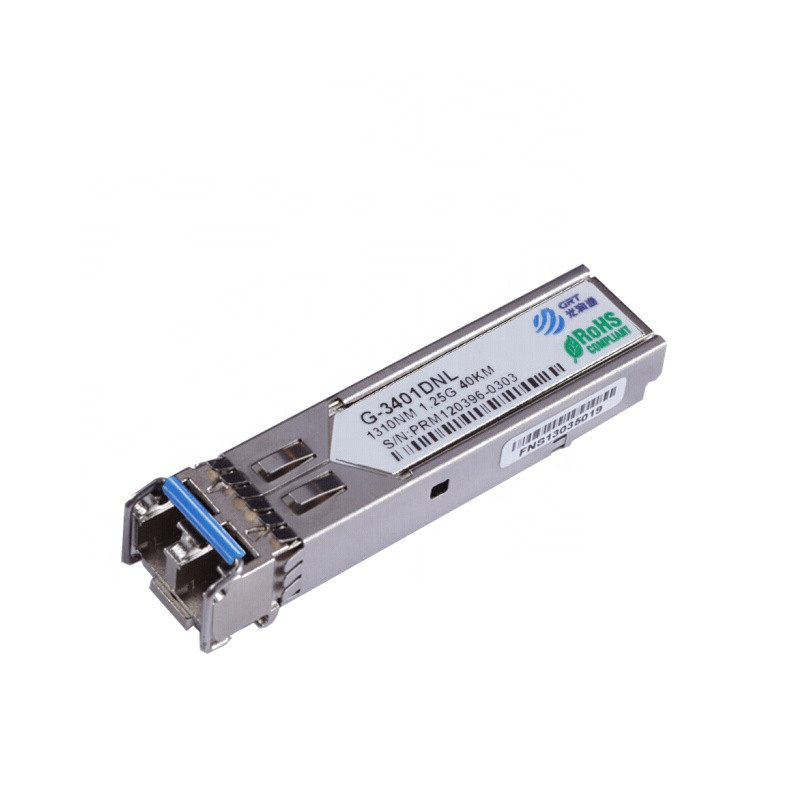
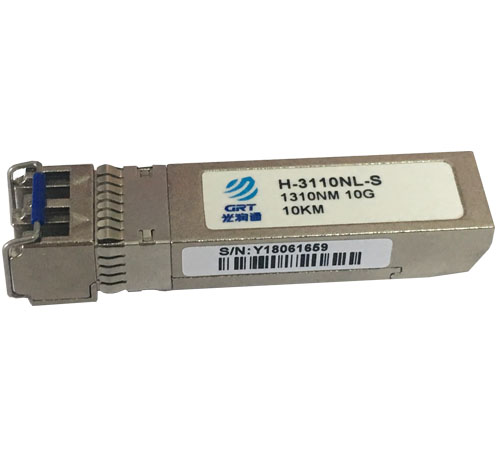
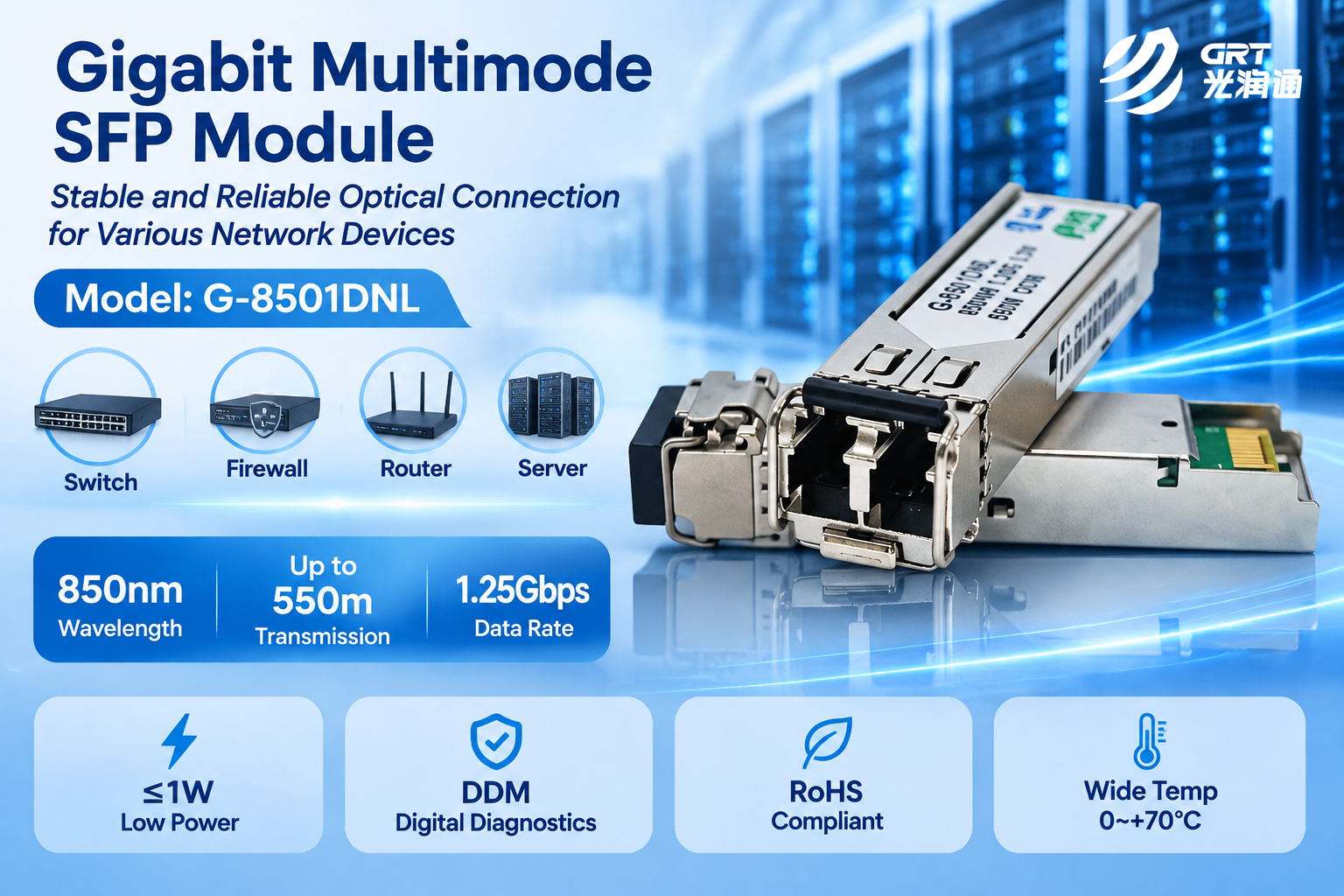
The G-8501DNL adopts the industry-standard SFP form factor and an LC connector. It can be seamlessly integrated with mainstream switches, firewalls, routers, servers, and other network devices equipped with SFP ports. Its plug-and-play design simplifies deployment and significantly reduces equipment installation and upgrade costs. The module features an 850nm VCSEL laser transmitter and a PIN photodetector, supporting transmission distances of up to 550 meters over 50/125μm multimode fiber (MMF), making it ideal for short- and medium-distance device interconnections.
For reliable operation, the module uses a single +3.3V power supply and consumes less than 1W, combining energy efficiency with operational stability to meet the low-power requirements of servers, switches, and other equipment. It also features low electromagnetic interference (EMI) and excellent electrostatic discharge (ESD) protection, helping resist signal interference in densely deployed multi-device environments and maintain data integrity. In addition, the product complies with RoHS environmental requirements, meets the IEC-60825 laser safety standard, and supports SFF-8472-compatible Digital Diagnostics Monitoring (DDM). This function enables real-time monitoring of module operating status and simplifies maintenance of switches, routers, firewalls, and other devices.
II. Technical Specifications: Precisely Optimized for the Transmission Requirements of Multiple Devices
● Optical Performance: Stable and Efficient Signal Transmission to Meet Device Bandwidth Requirements
The module supports data rates of up to 1.25Gbps, precisely matching the Gigabit transmission requirements of switches, routers, and servers. The transmitter and receiver operate around the 850nm wavelength band (transmitter: 840–860nm; receiver: 770–860nm), ensuring accurate signal transmission between devices. The transmitter provides an average output power of -8 to -3dBm, an extinction ratio of ≥9dB, rise/fall times of ≤0.26ns, and total jitter of no more than 0.43UI. Its optical eye diagram is fully compatible with IEEE 802.3z and ANSI Fibre Channel standards, effectively reducing the risk of signal distortion during data transmission between devices.
The receiver also delivers excellent performance, with a sensitivity of -19dBm, an overload level of -3dBm, 12dB return loss, and LOS hysteresis of 0.5–5dB. Even in complex link environments involving switch stacking or router cascading, it can accurately detect weak signals and help prevent data loss or bit errors between devices.
● Electrical and Environmental Adaptability: Wide Compatibility for Diverse Deployment Environments
In terms of electrical characteristics, the transmitter has a differential input impedance of 90–110Ω and a differential data input swing of 500–2400mV. The receiver has a standard differential output impedance of 100Ω and a differential output swing of 370–2000mV. Both use LVPECL-compatible data interfaces, matching the electrical interface standards of switches, firewalls, routers, and servers to ensure efficient signal communication between devices. The TX Disable and TX Fault functions enable flexible transmitter control and fault alerts, while the Loss of Signal (LOS) detection function provides real-time feedback on receiver status. These features help technicians quickly locate connection faults between devices and improve network maintenance efficiency.
For environmental adaptability, the product is available in two versions: commercial grade (G-8501DNL, 0 to +70°C) and industrial grade (G-8501DCV, -40 to +85°C). The storage temperature ranges from -40 to +85°C, and the operating relative humidity is 5%–95%. Whether deployed in centralized switch and server installations in data centers or at the network edge in industrial environments, the module delivers stable performance.
III. Application Scenarios: Supporting Diverse Network Architectures Across Multiple Devices
Thanks to its high compatibility with switches, firewalls, routers, and servers, the G-8501DNL is suitable for a wide range of key applications:
-
Switch Applications: Suitable for optical port expansion and stacking interconnections in enterprise switches and data center switches. It supports Gigabit-speed data forwarding between multiple switches and meets the bandwidth requirements of LAN backbone links and equipment clusters in server rooms, enabling efficient expansion of office and production networks.
-
Router Applications: Compatible with SFP optical interfaces on core and edge routers. It can be used for WAN access, metropolitan area network interconnections, and branch network expansion, serving as a transmission bridge between routers, switches, and servers while ensuring stable, low-latency data transmission across different regions.
-
Firewall Applications: Provides high-speed optical interfaces for next-generation firewalls and industrial firewalls. It supports low-latency, secure forwarding of data between internal and external networks, meeting the high-bandwidth requirements of enterprise security environments. It is suitable for coordinated deployment between firewalls, switches, and routers, helping maintain efficient transmission at network boundaries.
-
Server Applications: Compatible with SFP optical ports on rack servers and blade servers. It enables fiber-optic connections between servers and storage arrays, as well as between servers and switches, supporting efficient data exchange for virtualization, cloud computing, and big data processing. It is particularly suitable for high-density interconnections in data center server clusters.
-
Telecommunications and Fibre Channel Applications: Can be integrated into routers and switches used by telecommunications operators as auxiliary transmission links in access networks and metropolitan area networks. It is also suitable for connections between servers and storage devices in Storage Area Networks (SANs), helping ensure stable transmission for critical services such as database backup and virtualization resource scheduling.
IV. Reliability and Compliance: Quality Assurance for Long-Term Operation Across Multiple Devices
The product is designed and manufactured in strict accordance with industry standards. In addition to meeting RoHS environmental requirements and the IEC-60825 laser safety standard, it has passed stringent EMI and ESD tests. This helps ensure that the module neither generates nor suffers interference in complex electromagnetic environments where multiple switches, servers, and other devices are densely deployed. The module incorporates EEPROM for storing key configuration information and supports hardware-level identification and parameter reading. Combined with comprehensive pin definitions and recommended application circuit designs, it enables fast hardware compatibility with switches, firewalls, routers, and servers, further simplifying installation and improving long-term operational stability.
V. Ordering Information
-
Commercial-Grade Model: G-8501DNL (Operating temperature: 0 to +70°C), suitable for standard deployments in data centers and equipment rooms involving switches, servers, routers, and other devices.
-
Industrial-Grade Model: G-8501DCV (Operating temperature: -40 to +85°C), suitable for demanding industrial deployments involving firewalls, edge routers, and other equipment.
Latest information
- Gigabit Multimode SFP Module for Switches, Firewalls, Routers, and Servers
- Core Differences Between NIC Redundant Link Functionality and Bypass NICs
- How to Monitor Laser Bias Current to Predict Optical Module Aging
- What Is the Normal Transmit Optical Power of a 10G Optical Transceiver? A Look at the Guangruntong (GRT) H-3410FNL-S
- AC Coupling Capacitors: Small but Essential Components in High-Speed PCIe Signaling
- GRT 200G Multimode Optical Transceiver
- Network Troubleshooting
- Wavelength Division Multiplexing: Enabling Fiber Optics to Carry More Data